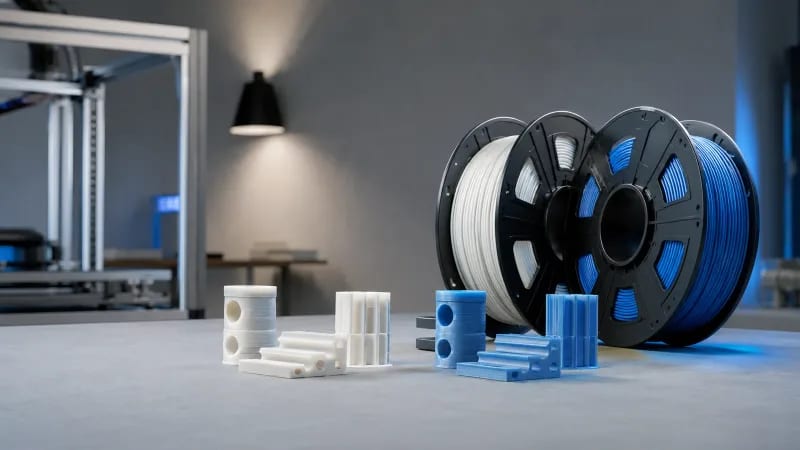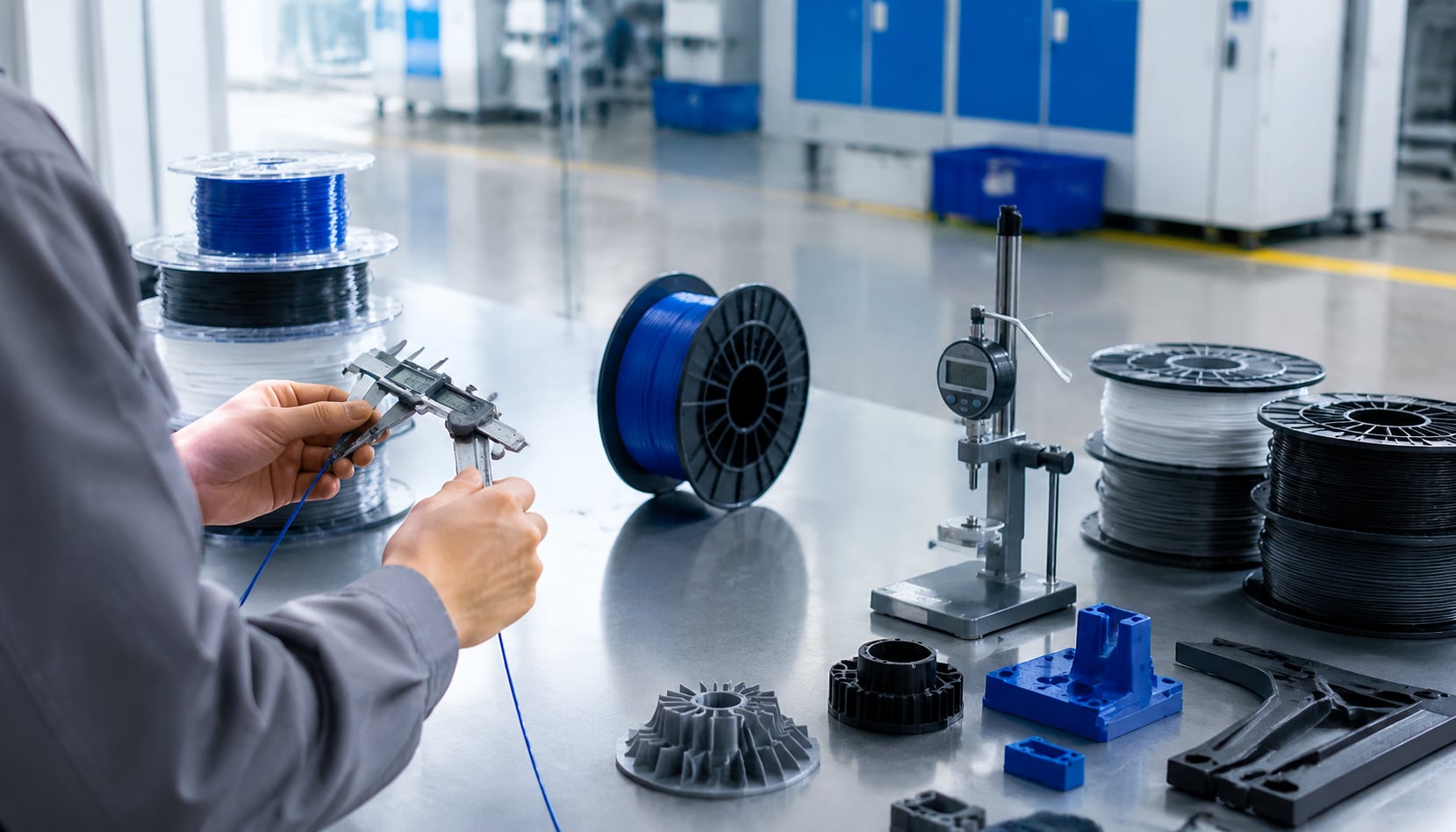
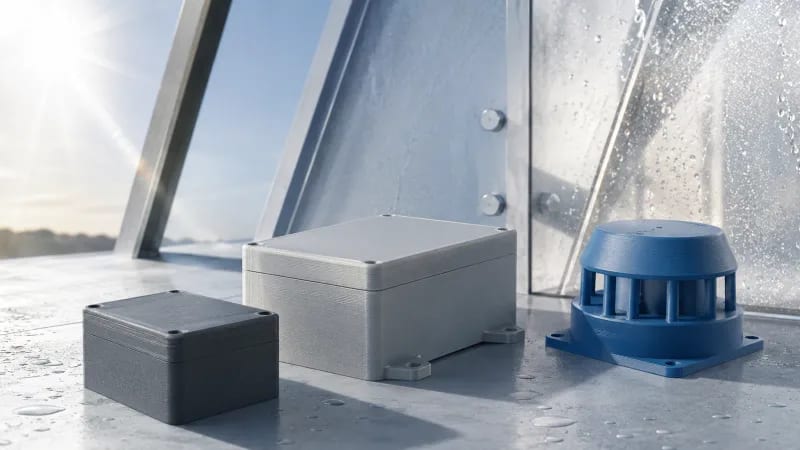
ABS and ASA sit in the same practical family for FDM users: both can produce tough, heat-resistant functional parts when the printer, chamber, surface, and cooling strategy are controlled. The difference is not that one material is “professional” and the other is not. The real difference appears when the part leaves the printer and has to survive sunlight, weather, temperature cycles, handling, finishing, and repeat production.
Use this guide when you are choosing material for housings, brackets, covers, fixtures, outdoor accessories, appliance parts, automotive-adjacent prototypes, or private-label filament programs. The goal is to turn a vague material choice into a controlled qualification plan.
Treat every temperature, speed, drying cycle, and property value as a starting point until it has been confirmed with the actual material grade, printer, geometry, environment, and acceptance method.
| Requirement | Better default | Why it matters |
|---|---|---|
| Outdoor sunlight | ASA | ASA better resists UV-driven fading, chalking, and surface embrittlement. |
| Indoor fixtures | ABS or ASA | Both can work when chamber control, wall design, and layer bonding are validated. |
| Painted or smoothed prototypes | ABS | ABS has broad finishing familiarity and strong indoor performance. |
| Exterior housings | ASA | Weathering, color retention, and appearance over time are usually the deciding risks. |
| Lowest process risk | Neither by default | Both need enclosure control, ventilation, and disciplined first-layer setup. |
Start With the Service Environment
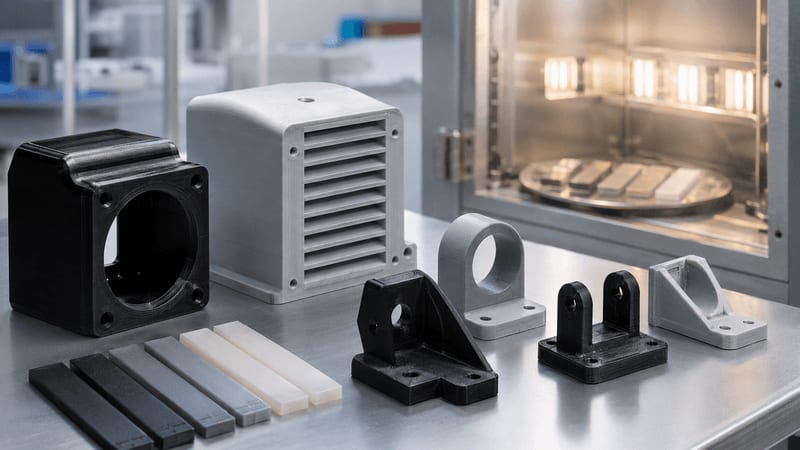
Before comparing datasheets, define where the part will live. A small indoor control box, a garden sensor cover, a vehicle accessory, and a factory fixture may all look similar on the printer bed, but the service environment changes the material decision.
For indoor parts, ABS remains a strong candidate. It offers useful toughness, heat capability, machinability, and post-processing options. When the part is protected from sunlight and rain, the main risks are printing stress, dimensional control, assembly fit, and mechanical loading.
For outdoor parts, ASA is usually the safer default. UV exposure can fade color, dull the surface, and gradually weaken the outer layer of many polymers. ASA is formulated to handle sunlight and weathering more gracefully, which makes it better suited for exterior housings, brackets, clips, vents, mounts, and decorative outdoor components.
When a part sees mixed conditions, write the environment down clearly: sun angle, expected temperature, water exposure, cleaners, mechanical load, color requirement, and target lifetime. A part that survives three weeks on a balcony may still fail a one-year retail promise.
Mechanical Performance Is Geometry-Dependent
Well-printed ABS and ASA can both make strong functional parts. In many real builds, the difference between a good part and a weak part comes from geometry and process control more than the material label.
Pay attention to wall count, corner radii, hole spacing, layer orientation, rib design, screw boss thickness, and insert strategy. A sharp internal corner can concentrate stress. A thin upright tab may fail at layer lines. A screw boss that is too close to an outer wall can split during assembly, even if the polymer itself is suitable.
For production evaluation, do not approve the material using a generic cube. Print the actual load-bearing features: clips, hinge barrels, bosses, snap hooks, brackets, vent walls, cable holes, or mating surfaces. Then test them in the same direction and temperature the customer will use.
Practical mechanical checks
- Bend thin tabs repeatedly and inspect for whitening, cracking, or layer separation.
- Install screws or heat-set inserts into real bosses and check for splitting.
- Test clips after the part has cooled for 24 hours, not only immediately after printing.
- Measure critical dimensions before and after thermal exposure.
- Keep failed parts; the fracture surface often explains whether the issue is material, geometry, moisture, or layer bonding.
UV and Weather Resistance
ASA earns its reputation outdoors because it is built for better weatherability. If the part will sit in sunlight, rain, or seasonal temperature changes, treat UV resistance as a primary performance requirement rather than a cosmetic preference.
ABS can be used outdoors for short-term prototypes, protected assemblies, painted parts, or applications where appearance is not critical. But unprotected ABS is more likely to show fading, surface chalking, brittleness, and loss of polish after exposure. Paint or coating can help, but then the coating system becomes part of the qualification.
ASA is the cleaner choice when color retention, surface appearance, and outdoor life are part of the promise. This matters for products such as camera housings, garden devices, roof-mounted accessories, exterior clips, signage hardware, equipment covers, and automotive-adjacent components.
The best validation is not a single print. Compare material batches, colors, wall thicknesses, and surface finishes. Dark colors can heat up more in the sun. Thin walls move more easily under thermal stress. Gloss and texture can change how weathering appears to the customer.
Heat Resistance and Thermal Cycling
ABS and ASA both handle heat better than PLA, but neither should be approved from a headline temperature alone. Practical heat resistance depends on load, wall thickness, time, orientation, part color, and enclosure design.
A black outdoor housing in direct sun may reach a higher surface temperature than expected. A bracket under constant load may creep even if it survives a short heat test. A thin cover may warp while a ribbed version of the same part remains stable. This is why material choice and part design should be qualified together.
Use a simple thermal validation sequence:
- Measure the printed part at room temperature.
- Expose it to the target heat condition while supported as it will be used.
- Let it cool naturally.
- Measure the same points again.
- Inspect mating features, screw holes, flatness, color, and surface texture.
If the part will cycle between day and night temperatures, repeat the exposure. A single heat soak can miss slow distortion caused by repeated expansion and contraction.
Warping and Enclosure Control
Both materials shrink more than easy-printing PLA. Warping is not only a first-layer problem; it is a stress-management problem across the whole print.
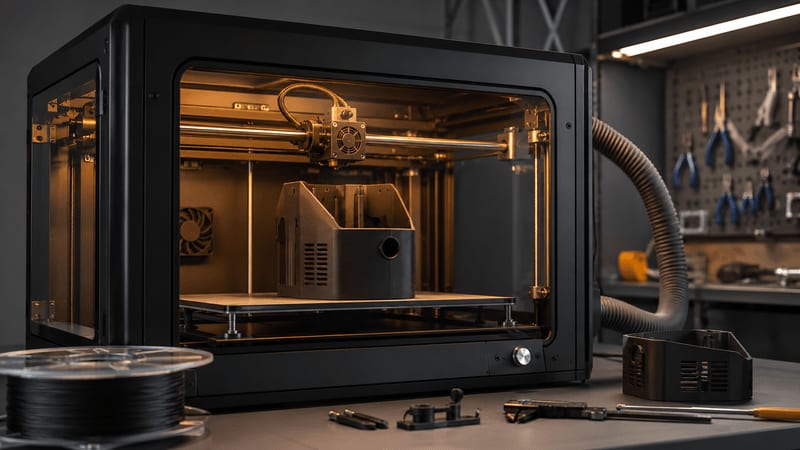
A stable chamber helps the part cool more evenly. Drafts, aggressive fan settings, cold room air, and sudden door opening can create uneven contraction. Large flat parts, sharp corners, tall walls, and thick-to-thin transitions are especially sensitive.
For ABS or ASA, start with a clean build surface, a properly leveled bed, slow first layers, and conservative cooling. Brims can help vulnerable corners, but a brim should support a controlled process rather than hide severe warping. If the part still lifts, inspect geometry before only raising bed temperature.
Process window notes
| Process area | What to control | Common symptom when ignored |
|---|---|---|
| Chamber | Warm, draft-free, stable environment. | Corner lift, layer cracking, inconsistent dimensions. |
| Cooling | Low or controlled fan, especially on large parts. | Warping, weak layer bonding, surface stress. |
| Bed surface | Clean PEI, engineering surface, or suitable adhesive interface. | First-layer release or over-bonding. |
| Geometry | Radiused corners, ribs, balanced wall thickness. | Distortion after cooling even if the first layer sticks. |
| Removal | Let the part cool before forcing release. | Cracked edges, bent panels, damaged build surface. |
Odor, Ventilation, and Workplace Controls
ABS and ASA are styrenic materials, so ventilation matters. A good print farm workflow treats odor and emissions as operational controls, not afterthoughts. This is especially important for schools, offices, shared studios, and production rooms where several machines run for long periods.
Use enclosed printers where possible, place machines in a ventilated area, and avoid running large styrenic prints in small occupied rooms without airflow management. For production environments, document the machine location, ventilation method, operator expectations, and maintenance schedule for filters or extraction systems.
The material decision should include workplace reality. ASA may be better outdoors, but it still needs the same kind of sensible process control during printing. If a customer cannot provide enclosure and ventilation, a different material family may be a better recommendation.
Surface Finishing and Assembly
ABS is widely used for finishing workflows such as sanding, priming, painting, machining, and smoothing processes where appropriate. ASA can also be finished, but outdoor parts add another question: will the finish survive the environment as well as the substrate?
If the part will be painted, the paint system must be tested with the printed surface. Sanding direction, primer choice, layer texture, pigment, and cleaning method all affect adhesion. A beautiful first article can fail later if the coating chips around screw holes or edges.
Assembly deserves equal attention. Heat-set inserts, self-tapping screws, clips, adhesives, and ultrasonic welding each create local stress. Test assembly after the part has fully cooled and conditioned. For outdoor ASA parts, test after heat and UV exposure too, because a screw boss that works on a fresh print may behave differently after aging.
Color Retention and Appearance
Outdoor products are judged with eyes before calipers. Color shift, chalking, gloss loss, and uneven fading can make a functional part look failed even when it still holds shape.
ASA is generally preferred when the appearance must remain stable. Still, color formulation matters. Pigment selection, surface finish, wall thickness, and exposure angle can change results. White, black, gray, and saturated colors should each be tested separately if they are part of a product line.
For private-label filament programs, keep approved color plaques and printed reference parts. A spool color sample is not enough. The customer will see the printed part, not the filament strand.
Application Examples
Choose ABS when the part is mostly indoor, mechanically useful, and may need familiar finishing. Examples include equipment prototypes, appliance mockups, indoor housings, workshop fixtures, assembly jigs, test brackets, and painted presentation models.
Choose ASA when the part must face sunlight or weather. Examples include exterior sensor housings, garden equipment clips, outdoor camera mounts, roof accessories, vehicle-adjacent covers, exterior vents, and products where long-term color stability matters.
There are edge cases. Painted ABS can work outdoors when the coating is qualified. ASA can be used indoors when the buyer wants one material platform for both indoor and outdoor SKUs. The right answer is the one that survives the actual requirement with repeatable production.
Qualification Before Production
A clean qualification plan should include material condition, printer setup, representative geometry, appearance standard, dimensional inspection, heat exposure, UV or weather exposure if relevant, assembly testing, and retained samples.
Do not approve only the prettiest print. Approve a window. Record nozzle temperature range, bed temperature, chamber condition, cooling setting, bed surface, drying condition if used, wall strategy, and inspection method. Then keep a reference part from the approved run.
For OEM or private-label supply, also define packaging and storage. A material that prints well from a fresh dry sample can behave differently after poor storage, long shipping, or damaged packaging.
Final Takeaway
ABS and ASA are both capable materials, but they answer different business risks. ABS is a strong indoor functional material with familiar finishing behavior. ASA is the better default when sunlight, weathering, and color retention are part of the promise.
The best decision comes from testing the real part in the real environment. Define the service condition, print representative geometry, control the chamber, inspect after cooling, expose the part to heat and weather when relevant, and keep approved reference samples for repeat production.
Production checklist
- Define indoor, outdoor, heat, UV, moisture, load, and appearance requirements.
- Print the real geometry, including clips, bosses, holes, vents, and mating surfaces.
- Use a warm, draft-free chamber and document bed, fan, and cooling strategy.
- Test assembly, dimensions, surface finish, and color after conditioning.
- Keep retained samples and use change control before changing material, color, printer, or packaging.