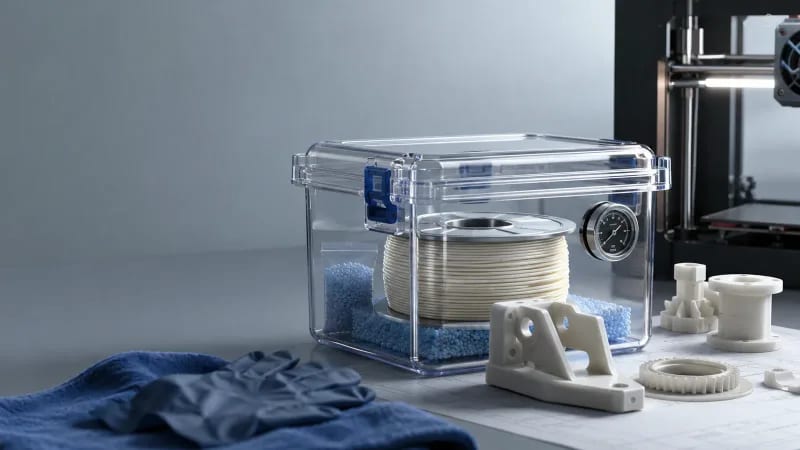

Inside a Filament Quality Control System is most useful when it is treated as a practical production question rather than a loose topic. This guide is written for filament manufacturers, brand owners, distributors, and print farm buyers who need repeatable decisions, clear approval samples, and fewer surprises after a print moves from test part to real use.
Consistent filament is the result of connected controls across the entire production line, not one final inspection.
Treat every temperature, speed, drying cycle, and property value as a starting point until it has been confirmed with the actual material grade, printer, geometry, environment, and acceptance method.
| Focus area | What to check | Risk if skipped |
|---|---|---|
| Measurement | Sampling method, records, acceptance range | Problems become subjective |
| Print test | Representative geometry and visual checks | Lab data misses user experience |
| Traceability | Batch, retained samples, complaint path | Root cause is hard to find |
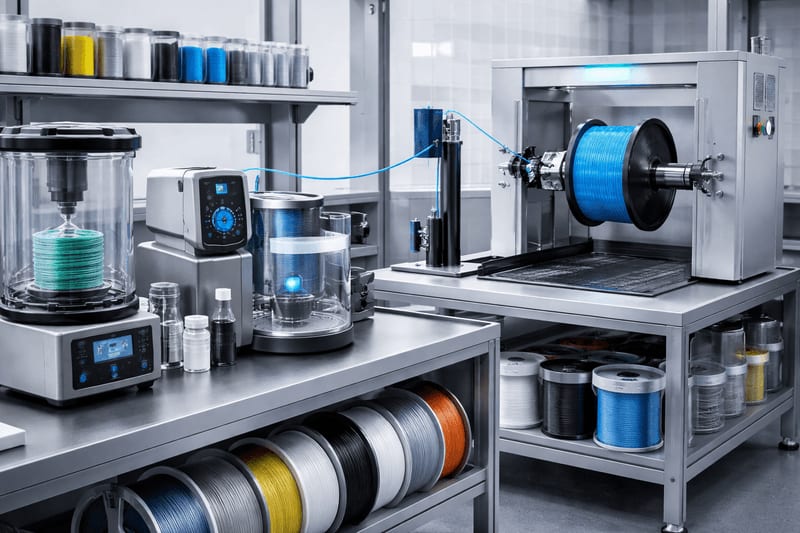
Define the Requirement
Start by writing down what filament quality control must actually accomplish. The useful requirement is specific: target users, printer type, material condition, geometry, environment, appearance standard, inspection method, and repeat-order expectation should all be named before approval.
For this topic, the most important variables are raw material batch, drying record, extrusion stability, diameter monitoring, color approval, winding tension, print validation, packaging seal, and complaint traceability. If those variables are not documented, a good sample can be difficult to repeat and a bad sample can be difficult to explain.
Build a Controlled Test Window
The first sample should prove direction, not final approval. Use a small, controlled test to compare the most important variables, then move to representative geometry or a complete workflow sample. Record the machine, material batch, profile, drying condition if relevant, room condition, and inspection result.
Change one variable at a time. When several variables change together, the result may improve but the team will not know why. A controlled test window turns a lucky result into a repeatable process.
Inspect the Real Use Case
Generic cubes and simple swatches are useful for isolation, but they do not replace the real application. Filament quality control should be checked under the same handling, geometry, storage, lighting, thermal, moisture, or shipping conditions that customers will actually experience.
Watch for good diameter with poor print feel, color drift, moisture bubbles, uneven winding, damaged vacuum bags, and customer complaints that cannot be tied to a batch. Keep failed samples because they often explain the next process change better than notes alone.
Control the Hidden Variables
Many failures are caused by variables that are easy to overlook. The hidden controls for this guide include raw material batch, drying record, extrusion stability, diameter monitoring, color approval, winding tension, print validation, packaging seal, and complaint traceability. These details are rarely exciting, but they are often what separates a repeatable product from a one-time sample.
For professional use, define who controls each variable. A material supplier may own batch consistency, the print farm may own drying and profiles, the brand may own packaging approval, and the warehouse may own storage and handling. Clear ownership prevents small issues from becoming repeated customer complaints.
Approve With Evidence
Approval should include QC record package, printed validation part, retained filament and packed sample, corrective-action path, and shipment batch link. Photos alone are not enough. The approved sample should represent the exact material, process, geometry, packaging condition, and inspection method intended for production.
Do not approve only the best-looking sample. Approve the window that can be repeated. If the production team cannot reproduce the result under normal conditions, the sample is not yet an approval standard.
Plan for Repeat Orders
A first order can succeed while the second order drifts. Repeatability depends on retained samples, batch records, artwork versions where relevant, color standards, process profiles, and change control. If material, supplier, printer, packaging, or geometry changes, the approval should be reviewed.
For OEM and commercial programs, keep a compact record package: requirement brief, sample approval, process notes, inspection method, packaging reference, and complaint path. This makes future changes faster and less risky.
Final Takeaway
The strongest result comes from combining material knowledge with disciplined validation. Define the requirement, test the real use case, control the process variables, and keep approved references. That approach makes filament quality control easier to repeat and easier to explain to customers.
Production checklist
- Define the actual application and most likely failure mode.
- Test representative geometry, packaging, handling, or service conditions.
- Record the key variables: raw material batch, drying record, extrusion stability, diameter monitoring, color approval, winding tension, print validation, packaging seal, and complaint traceability.
- Keep approved samples and failed samples for comparison.
- Use change control before altering material, color, supplier, packaging, or process.